How to Do Link Exchanges Without SEO Footprints

Link exchanges still happen every day in SEO. The part that gets people in trouble is not the existence of cross-linking itself. It is excessive, obvious, pattern-heavy exchanges done for ranking manipulation. Google’s spam policies explicitly call out excessive link exchanges such as “link to me and I’ll link to you” and partner pages created just for cross-linking. Google has also said its systems work to reduce the effectiveness of link spam, and manual actions can still be applied when they see link schemes.
That nuance matters.
Relevant sites naturally link to each other all the time. A SaaS tool cites a partner integration. A marketing blog references a useful study from another marketing site. An agency contributes a guest article to a niche publication and gets an editorial bio link back. Those are normal web behaviors. Problems start when your link profile begins to look engineered instead of earned.
If you want to use link exchanges without leaving footprints, the goal is simple: make every link make sense without the exchange ever needing to be mentioned. That means relevance, moderation, editorial context, and clean execution.
TL;DR
- Footprint Detection: Google identifies engineered patterns through crawl timing, anchor text repetition, and IP/subnet clustering.
- Devaluation vs. Penalty: Most engineered exchanges suffer from quiet algorithmic devaluation (no ranking lift) rather than manual penalties.
- Risk Threshold: Keep deliberate swaps under 10% of your total backlink profile to avoid looking manufactured.
- The "SCR" Test: Every link must pass the Scrutiny, Context, and Relevance test—would it survive a human editorial review?
- Actionable Mix: Aim for a natural anchor distribution: prioritize brand and URL anchors over exact-match commercial phrases.
Understanding Link Exchanges in Modern SEO
Before you worry about footprints, you need to be clear on what actually counts as a link exchange and what does not.
What Actually Constitutes a Link Swap?
A link swap is any arrangement where two or more parties agree to place links because each side expects a backlink benefit in return.
That includes the obvious version:
- Site A links to Site B
- Site B links back to Site A
But it also includes less direct arrangements:
- Site A links to Site B, and Site B arranges for Site C to link to Site A
- Two brands trade guest post placements across different properties
- A publisher inserts links across multiple existing articles as part of a mutual agreement
From a practical SEO perspective, the footprint risk comes from intent plus pattern.
If you occasionally link to a partner because their page genuinely improves your article, that is normal. If you maintain a spreadsheet of exact reciprocal placements with keyword anchors and matching publication dates, that is a different story. Search engines do not need to read your emails. They can evaluate the pattern left behind in the graph.
A useful real-world rule:
If the page would still deserve the link even if no one linked back to you, the placement is much safer.
Are Backlink Trades Officially Allowed by Google?
Google does not ban websites from ever linking to one another after a collaboration. What Google does prohibit is manipulative link behavior intended to game rankings, and its spam policies specifically list excessive link exchanges and partner pages built only for cross-linking as examples of link spam. Google also documents that sites can receive manual actions for paid links, link exchanges, and other link schemes.
That is why blanket statements like “all link exchanges are toxic” are too simplistic, and “Google can’t detect them” is equally wrong.
A better operating standard is this:
- Relevant editorial links between related sites are normal
- Excessive reciprocal patterns are risky
- Standalone exchange pages are a bad idea
- Contextual links inside useful content are far safer than obvious trade pages
So yes, there are legitimate collaboration scenarios where both sites end up linked. But if the exchange itself is the whole reason the link exists, you are already close to the line.
The Hidden Dangers: How Traditional Link Swaps Leave Footprints
Most failed link exchange campaigns do not fail because they built too few links. They fail because they built easy-to-spot patterns.
How Search Engines Detect Unnatural Link Patterns
Search engines have years of link graph data, anchor text data, crawl timing, site ownership signals, and spam classification systems. Google has publicly said its systems catch and neutralize a large share of link spam, which is why old-school mass trading tactics have become much less reliable.
In practice, the footprints usually look like this:
- Two sites repeatedly linking to each other across multiple pages
- Exact-match anchors appearing in both directions
- Similar placement types across every exchange, like author bio only or sitewide footer links
- A cluster of domains on the same IP range or subnet cross-linking in suspicious ways
- Partner pages that exist only to list “trusted resources” with no real editorial purpose
That IP and subnet issue is not theoretical. Link analysis platforms still use referring IP and subnet clustering as a sign that domains may belong to the same owner or network. Ahrefs’ documentation specifically notes that many referring domains on the same subnet can indicate common ownership or a network pattern. Semrush similarly treats repeated same-IP or same-network patterns as a spam signal in manipulated profiles.
So the footprint is rarely one thing. It is a stack of small signals that, together, look manufactured.
If your exchange process creates repeated patterns in relevance, timing, anchors, and ownership, that is the footprint.
Algorithmic Devaluation vs. Manual Penalties
These are two different outcomes, and SEOs often confuse them.
Algorithmic devaluation means the links simply stop helping much, or at all. Rankings stall, movement fades, and you never get the lift you expected. No warning. No message. Just underperformance.
Manual penalties are more serious. Google can apply a manual action when it finds evidence of link schemes, including unnatural inbound or outbound links. When that happens, the site owner is notified in Search Console and usually has cleanup work to do before recovery.
For most sites running moderate exchanges today, devaluation is the more common risk. You spend time sourcing, negotiating, writing, and placing links that barely move the needle because the pattern is weak or discounted.
That is why the smartest operators focus less on “Can I get away with this?” and more on “Would this link survive scrutiny if a human reviewed it?”
The Dangers of Excessive Direct Reciprocal Linking
Direct reciprocal linking is the easiest exchange model to run and the easiest one to overdo.
The issue is not one isolated reciprocal link between two related sites. The issue is when direct swaps become a habit. Once enough of your profile is made of obvious A↔B trades, the pattern becomes visible even in basic backlink tools.
Here is the practical danger:
If you are reviewing a prospect and you can already see they trade links with everyone in their niche, walk away. You are not entering a partnership. You are stepping into someone else’s footprint.
Which Types of Link Exchanges Are Actually Safe?
Not all exchange structures carry the same level of risk. The difference comes down to visibility, editorial logic, and how predictable the pattern looks from the outside.
Direct 1-to-1 Swaps (High Risk)
This is the classic setup. You link to me, I link to you.
It is simple, fast, and usually the worst option if rankings are your main goal.
Why it is high risk:
- The reciprocal pattern is obvious
- People tend to force the placement to “make the trade work”
- Anchors often become too commercial
- It scales badly because repetition creates a trail
If you do use direct swaps, keep them rare and only use them when the link is genuinely useful for users. A one-off mutual reference between two tightly related businesses can look completely normal. Fifty of them cannot.
A good filtering question here is:
Would I still approve this outbound link if the other site never linked back?
If the answer is no, skip it.
Three-Way or A-B-C Link Trades (Lower Risk)
A three-way exchange spreads the path:
- Site A links to Site B
- Site C links to Site A
This structure is lower risk because the direct reciprocity is hidden. That said, hidden is not the same as invisible. If the same group of sites repeatedly runs circular trades, search engines can still infer the relationship through ownership, timing, relevance patterns, and repeated collaboration behavior.
So yes, A-B-C trades are cleaner than A↔B trades. But they are only safer when the underlying placements are editorially justified.
Use three-way exchanges when:
- The domains are topically related
- The linking pages already have a valid editorial context
- The anchor text can stay natural
- The sites are not all controlled by the same obvious entity
- You are not repeating the same triangle pattern at scale
If your A-B-C trade requires weird article rewrites, unrelated topics, or exact anchor instructions, it is not a good trade. It is just a slightly disguised bad one.
Contextual Guest Post Collaborations (Safest)
This is usually the cleanest model because the link is wrapped inside a legitimate content contribution.
A good contextual collaboration looks like this:
- You contribute a useful article to a relevant site
- The host edits and publishes it because it fits their audience
- One contextual link points to a page on your site that genuinely expands the topic
- The article would still be worth publishing if the link were removed
That last point matters.
Google’s problem is not “guest posting exists.” The problem is guest posting at scale with keyword-stuffed anchors and thin, exchange-driven content. A strong guest collaboration can still work because it behaves like editorial publishing, not trade-page barter. Google also provides link qualification options such as rel="nofollow" and rel="sponsored" when a link relationship should not pass ranking signals.
When I want the safest path, I look for content-led collaborations first, three-way trades second, and direct reciprocal swaps only in limited edge cases.
How to Find and Vet High-Quality Link Exchange Partners
This is where most of the outcome is decided. A smart outreach process cannot rescue a bad partner list.
Setting Strict Minimum Metric Requirements
Do not prospect with vague standards like “decent DR” or “looks okay.”
Set hard filters before you contact anyone.
A practical mid-market baseline might look like this:
- Domain relevance must be close to your niche or a logical adjacent niche. Ensuring topical relevance is the first step toward a safe and effective partnership.
- Organic traffic should be real and non-trivial. Finding partners with real traffic ensures that the links carry actual authority and user value.
- Referring domains should look diversified, not inflated by junk
- Anchor profile should lean branded and natural
- The site should publish content that real people could plausibly read
For metrics, I usually set minimums like:
- DR or Authority Score high enough that the site has some real authority
- At least a visible baseline of ranking pages and non-zero organic traffic
- No obvious disconnect between backlink strength and traffic reality
That last one is important. Semrush explicitly treats imbalance between large backlink profiles and weak organic traffic as a possible sign of manipulation. It also uses spam indicators such as unnatural follow ratios and same-network link patterns in Authority Score calculations.
So instead of obsessing over one metric, use a three-part check:
- Does the site have authority?
- Does it get search traffic?
- Does the backlink profile look natural?
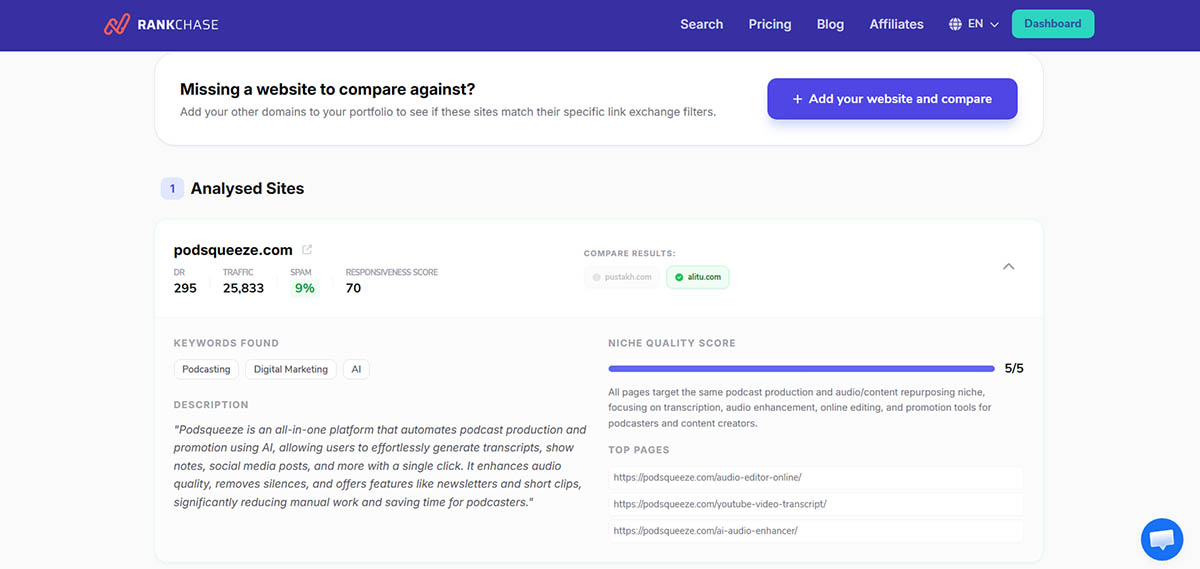
You can automate these checks using our Bulk Domain Checker. It allows you to verify DR, traffic, and spam scores for multiple domains at once, while the Niche Quality Score helps you ensure that each partner's authority is topically relevant and free from "junk" traffic footprints.
If one of those is badly off, pause.
Identifying Toxic Sites and Link Farm Red Flags
You can usually spot bad prospects in under three minutes if you know what to check.
Here is a simple vetting table I use:
A few hard-stop warnings:
- “Write for us” pages are not automatically bad, but if the whole site feels built around outbound links, skip it.
- If every article contains multiple commercial anchors to unrelated businesses, skip it.
- If categories feel random and content quality falls off a cliff outside a few pages, skip it.
- If the site’s outbound linking behavior is clearly monetized or mechanical, skip it.
Ahrefs’ referring IP report can help surface whether many referring domains are grouped on the same IP or subnet, which may indicate a network pattern. Tools that expose anchor text and surrounding text are also useful because you can quickly see whether links are contextual and natural or obviously inserted.
Top Tools for Prospecting Potential Partners
You do not need ten tools. You need a clean workflow.
A practical stack looks like this:
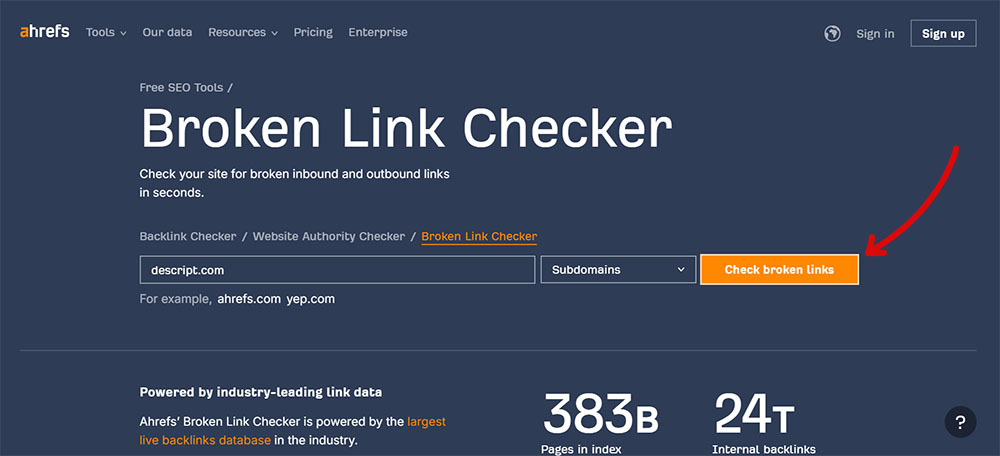
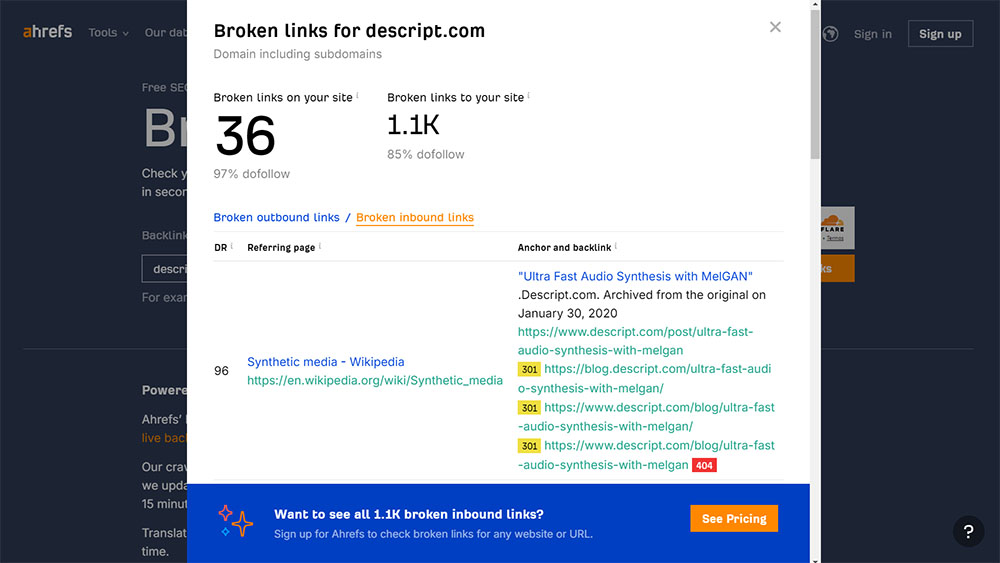
Ahrefs is useful for checking referring domains, anchors, linking pages, broken outbound links, and surrounding link context. Its reports let you inspect anchors and nearby text on referring pages, and its broken links reports help you avoid linking to dead destinations or outdated resources.
Semrush is useful for evaluating authority, organic traffic patterns, anchor mix, and spam indicators. Its documentation also shows how it surfaces authority, anchor categories, and toxicity-related filters for backlink review.
Google search operators are still underrated. Search the site directly. Check indexed pages. Look for quality drift. Search brand mentions. Search for weird adult, casino, or pharma traces if you suspect spam contamination.
And if you want a more structured partner discovery workflow, Rankchase can help narrow options by niche relevance, DR, traffic patterns, and spam indicators so you start with more selective opportunities instead of scraping random “guest post” lists.
Step-by-Step Guide to Executing a Footprint-Free Link Swap
Once the partner passes the quality test, execution matters. A clean partner can still become a messy link if the process is lazy.
Finding the Right Decision Maker
Do not pitch generic inboxes first if you can avoid it.
You want the person who can actually approve content edits or collaborations:
- Editor
- Content manager
- SEO lead
- Partnerships lead
- Founder, for smaller sites
If the website has a real editorial operation, contact the content owner. If it is a lean niche site, the founder is often still the right move.
A quick workflow:
- Check the article bylines
- Check the team or about page
- Look for editorial contact pages
- Use LinkedIn or company profiles to confirm role fit
- Only use generic contact forms as a fallback
This matters because weak outreach often fails before the offer is even judged.
Crafting a Personalized Pitch (Without Sounding Spammy)
Most link exchange emails die because they sound like link exchange emails.
Do not open with “I love your content” and then ask for a backlink in line two. Experienced editors see that pattern instantly.
Instead, reference a specific page, explain the fit, and suggest a concrete value-add.
Bad pitch: “Hey, we can exchange backlinks. Interested?”
Better pitch: “I was reading your guide on internal linking and noticed you mention crawl depth, but there is no supporting example for enterprise sites. We recently published a case-backed resource on that exact issue. It could fit naturally in the section on architecture decisions. If helpful, I can also contribute a short expert piece for one of your related content gaps.”
That works better because it starts with page-level context, not a transaction.
A simple rule:
- Mention the exact article
- Mention the exact gap or angle
- Suggest the exact page that fits
- Keep the ask light
- Leave room for alternatives
Proven Outreach Email Templates for Collaboration
Use templates as structure, not as copy-paste.
Template 1: Contextual insertion
Subject: Quick suggestion for your [topic] guide
Hi [Name],
I was reading your article on [topic] and noticed the section about [specific point]. You explain the concept well, but I think readers might benefit from a more detailed example around [specific angle].
We have a resource that covers that angle in depth: [your page].
If you think it improves the article, feel free to add it where it fits naturally. If not, no worries.
Either way, I’m happy to share one of your pieces in an upcoming article if there’s a relevant fit on our side.
Best,
[Your name]
Template 2: Three-way collaboration
Subject: Possible content collaboration
Hi [Name],
I’m reaching out because your site is closely aligned with our audience in [niche]. We’re currently planning a few editorial collaborations with relevant publishers.
One idea is a content-led collaboration where we reference one of your resources from a related article on our side, and in return we can explore a relevant placement for one of our resources on one of your existing or upcoming pages.
I only want to do this if the fit is clean on both sides. If you’re open to it, I can send over two page-level suggestions.
Best,
[Your name]
Template 3: Guest post collaboration
Subject: Article idea for [site name]
Hi [Name],
I have an article idea that would fit your audience: [proposed title].
It would cover:
- [point one]
- [point two]
- [point three]
I’d write it specifically for your site and keep it practical. There’s also one relevant supporting resource on our side that could be cited in context if it adds value, but the piece should stand on its own.
Want me to send a short outline?
Best,
[Your name]
Notice the pattern. None of these templates leads with “let’s swap links.” That phrasing creates suspicion immediately and invites low-quality operators.
Managing the Live Link Process
This is where campaigns quietly get sloppy.
Once both sides agree, manage the process like an operator:
Before publication
- Confirm target URL
- Confirm preferred anchor style
- Confirm page placement
- Confirm whether the page is already indexed and relevant
- Confirm the link is not going on a junk page created just for the deal
At publication
- Check that the link is crawlable in a normal
<a href>format because Google’s link best practices still rely on crawlable anchor elements. - Verify the page is indexable
- Confirm the anchor reads naturally in the sentence
- Screenshot the placement
- Log the URL, date, anchor, and contact owner
After publication
- Recheck in 7 to 14 days
- Make sure the page stays live
- Watch for silent edits to anchor text or link attributes
- Track whether the page starts dropping from index or gets rewritten into thin content
If you are not logging this, you are going to lose links, forget obligations, and accidentally repeat patterns with the same domains.
Golden Rules for Keeping Your Link Strategy Invisible to Google
This is the operating layer. If you follow these rules consistently, your exchange profile stays much cleaner.
Maintain Strict Topical Relevance Between Domains
Relevance is your first shield.
If a CRM blog links to a sales enablement resource, that makes sense. If the same CRM blog starts linking to online casinos, CBD offers, and mattress reviews, the editorial logic breaks.
Keep the match tight:
- Same niche
- Same audience
- Same problem space
- Or a clear adjacent relationship
The more explanation a link needs, the weaker it is.
A good test is to read the paragraph aloud. If the linked page feels like a natural next click for the reader, you are in good shape.
Keep Swaps Under 10% of Your Total Backlink Profile
This is not an official Google threshold. It is a practical risk-control rule.
When link swaps become too large a share of your profile, patterns become easier to spot and your site becomes more dependent on links that may get removed, devalued, or questioned later.
I like keeping deliberate exchange-based links to well under 10% of total referring domains. For stronger brands, even lower is better.
If you have 200 referring domains, and 40 of them came from obvious collaboration swaps, that is too aggressive. If 8 to 12 came from tightly relevant, editorially justified collaborations, that is much easier to absorb into a natural profile.
This matters because diversity of referring domains is still a core way backlink profiles are evaluated, and one domain can send multiple backlinks while still counting as a single referring domain.
Vary Your Anchor Text Naturally
Anchor text is where otherwise decent campaigns expose themselves.
If every partner uses your exact target keyword, the footprint becomes obvious fast.
Aim for a natural distribution:
- Brand anchors
- URL anchors
- Partial-match descriptive anchors
- Generic anchors when the sentence supports them
- Exact-match anchors only sparingly
Semrush’s backlink documentation and backlink audit materials both emphasize anchor review because money anchors and compound keyword-heavy anchors are more likely to indicate SEO-driven placement than natural editorial citation.
A fast decision rule:
- If the anchor sounds like something a writer would naturally choose, keep it
- If it sounds like it came from a keyword brief, soften it
Monitor Your Live Placements Regularly
Links disappear. Pages get rewritten. Sites get sold. Domains expire. Editors change their minds.
So monitoring is not optional.
A short monthly checklist:
- Check whether each agreed link is still live
- Check whether the page is still indexed
- Check whether the anchor changed
- Check whether the site quality declined
- Check whether the page now links out to spammy neighbors
- Check whether your own outbound link still deserves to stay
Ahrefs provides ways to inspect live backlink locations, anchor text, surrounding text, and broken outbound links, which is useful for this maintenance step.
The safest link exchange is the one you are willing to remove later if the page, partner, or context stops making sense.
Frequently Asked Questions About Safe Link Building
Can Google's algorithm detect three-way link exchanges?
It can detect signals that suggest coordinated link behavior, even when the exchange is not direct. Google’s spam policies target manipulative linking, not just simple A↔B swaps, and its broader anti-spam systems evaluate patterns at scale. If the same sites repeatedly trade links through circular arrangements, use unnatural anchors, or share ownership and network footprints, those signals can still add up.
A one-off three-way collaboration between relevant sites is much less risky than a large repeatable system. The structure alone does not make it safe. The editorial logic does.
How long does it take to see ranking improvements from link trades?
If the links are actually passing value and the pages are already indexed, you can sometimes see movement in a few weeks. More often, meaningful impact shows up over 4 to 12 weeks, especially when the links point to pages that already have decent on-page targeting and internal support.

If nothing happens, check the obvious issues first:
- The page was weak to begin with
- The link was devalued
- The anchor was over-optimized
- The linking page has little authority
- The site is part of a noisy exchange footprint
In other words, do not assume “link acquired” means “value received.”
What should I do if a partner removes my link?
First, verify whether it was removed intentionally or as part of a page update.
Then handle it in this order:
- Reach out politely and ask whether it was accidental
- If the page changed, suggest a new contextual placement only if it still makes editorial sense
- If they refuse or ignore you, remove or reconsider your reciprocal obligation
- Update your tracking sheet so the relationship is not counted as active
- If the partner site quality has dropped, consider that a blessing and move on
Do not chase every lost link aggressively. Some links should stay lost.
A practical mindset helps here. You are not building a private treaty network. You are building a backlink profile that should still look clean a year from now. That means choosing fewer partners, being pickier than feels comfortable, and treating every exchanged link like it must justify itself on the page. If you do that, you can use collaborations and selective link trades without leaving the kind of footprint that turns a smart tactic into a ranking liability.