How to Find Quality Link Partners with Real Traffic

Link exchanges still happen in SEO. The part that trips people up is separating a normal editorial relationship from a manufactured link scheme.
If you have ever traded links with a relevant site, sent outreach to a content partner, or added a useful resource from a company you know in your niche, you already understand the gray area. Google does not treat every cross-link between related websites as spam. It does warn against excessive link exchanges and other manipulative patterns designed mainly to pass ranking signals. That nuance matters if you want results without creating cleanup work later, as explained in Google's documentation.
This guide is built for the practical version of link exchange prospecting. Not mass swaps. Not “partners” pages with 200 outbound links. Not random DA chasing. The goal is to find real sites with real audiences, place links where they make sense, and keep your profile looking like something a legitimate brand would build. This is a core part of doing link exchanges without footprints that could be flagged by search engines.
TL;DR
- Traffic Shape: Look for stable growth and keyword overlap with the niche; avoid sites where 90% of traffic lands on one viral outlier.
- Authority Imbalance: A high DR with zero organic traffic is a major red flag for manipulation or PBN behavior.
- Editorial Care: If a site doesn't protect its own content quality, it won't protect your link either.
- Human Value: A link is a win if it sends qualified referral sessions, even if rankings move slowly.
- ROI Tracking: Measure success at the page level by tracking ranking movement over 30, 60, and 90 days following the placement.
Understanding Link Exchanges in Modern SEO
Before you start prospecting, get the definition straight. A lot of bad decisions happen because people lump together every kind of collaborative link into one bucket.
What Does It Mean to Swap Links?
At the basic level, a link exchange means two or more websites agree to link to each other.
That can happen in a few ways:
- Site A links to Site B, and Site B links back
- Site A links to Site B, while Site C links to Site A in a 3-way arrangement
- Two brands collaborate on content, and each earns a contextual mention on relevant pages
- A partner is included on a tools page, resource page, comparison page, or guest article
The important distinction is why the link exists. If the page would still make sense to a reader without the SEO angle, you are usually in safer territory. If the page exists only to trade PageRank, you are walking toward a problem.
I look at it like this in real campaigns: if I would be comfortable showing the placement to a client, an editor, and a Google reviewer in the same room, it is probably reasonable. If I need to explain away why a plumbing site is linking to a crypto casino on a “trusted partners” page, it is a bad link before any tool score tells me so.
Why Domain Authority and Relevance Matter
People obsess over authority metrics because they are easy to sort in a spreadsheet. That is useful, but incomplete.
Third-party authority scores are just proxies. They can help you prioritize, but they are not Google metrics. They work best when paired with topic relevance, traffic quality, and editorial fit. Semrush, for example, calculates Authority Score using link power, organic traffic, and spam indicators rather than backlinks alone.
A strong prospect usually checks four boxes:
-
Same or adjacent niche
You should be able to explain the relationship in one sentence. -
Real organic visibility
The site ranks for terms that match its topic, not just branded or junk queries. -
Pages worth being linked from
Not tag pages, spun guest posts, or thin “resources” pages built for selling links. -
Editorial standards
The site has a voice, updates content, and is not linking out like a coupon directory.
If I had to choose between a DR 70 general site with weak topical alignment and a DR 35 niche site with steady search traffic and a highly relevant page, I would usually take the second one for a link swap. That is the kind of link people actually click.
The Pros, Cons, and Risks of Exchanging Links
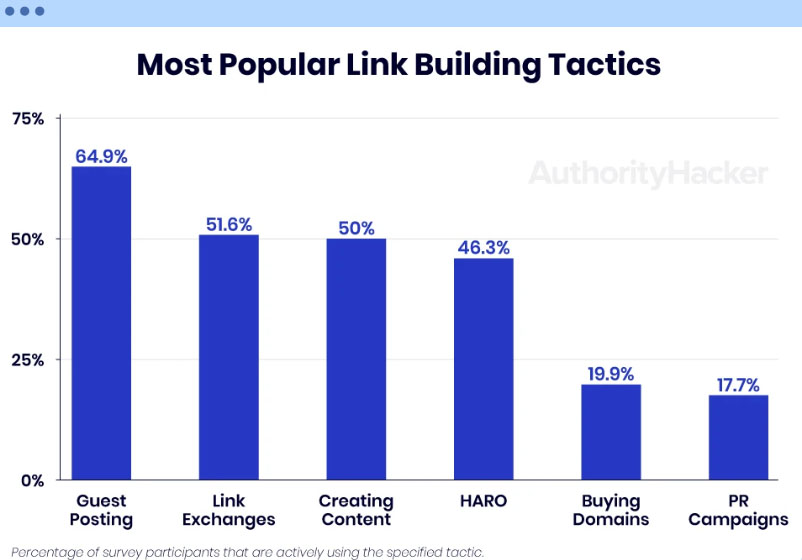
Link exchanges are not automatically good or bad. They are one tactic. The upside comes from relevance and restraint. The downside comes from scale, patterns, and low standards.
SEO Advantages and Traffic Growth
A good link exchange can do three things at once.
First, it can help search engines discover and understand your page through relevant anchor text and contextual association. Google’s own documentation says links help it find pages and understand relevance, and that good anchor text should be descriptive and relevant.
Second, it can send qualified referral traffic. This part gets ignored too often. A contextual link on a page that already gets traffic can bring visitors who are actually interested in what you offer. That is why I care more about the referring page than the homepage metrics. Ahrefs also notes that links from pages with traffic have a higher chance of sending clicks.
Third, it can create relationship equity. Once you have one clean collaboration with a relevant publisher or brand, future guest posts, co-marketing pieces, data roundups, and brand mentions become much easier.
A realistic win looks like this:
- You publish a detailed guide on Shopify migration
- A SaaS consultant who writes for ecommerce operators adds your article to a migration checklist
- You mention their platform in a tools comparison where it genuinely fits
- Both pages already rank for niche terms
- Both links make sense to readers even if SEO disappeared tomorrow
That is a much healthier setup than swapping homepage footer links because both sides want “more backlinks.”
Understanding Google's Guidelines on Link Schemes
Google’s spam policies focus on links intended to manipulate rankings. That includes link spam patterns and excessive exchanges. Google has also specifically warned against large-scale cross-linking and pages created just for exchanging links.
That does not mean every mutual link is toxic. The web naturally contains reciprocal links. Vendors link to partners. Associations link to members. Publications reference sources that later cite them back. Google also recommends linking to relevant resources when they help users.
The practical rule is simple:
Trade links only when the page deserves the link on editorial grounds.
If the deal requires awkward placements, irrelevant anchors, or pages built only for swaps, skip it.
This is also where moderation matters. Ten careful, relevant partnerships over a year look normal. Fifty cross-links in a month across unrelated sites looks engineered.
Potential Search Engine Penalties
There are two ways bad link exchanges hurt you.
The first is quiet devaluation. Google’s systems may simply ignore manipulative links. You spend time building them, but rankings do not move.
The second is more painful: manual action or algorithmic suppression tied to unnatural link patterns. Google has said sites can receive manual action notices for paid links, link exchanges, or other violating schemes, and those issues often require cleanup and reconsideration work.
The signs usually show up before the penalty:
- sudden bursts of low-quality reciprocal links
- repeated exact-match anchors
- many links from unrelated blogs with similar layouts
- dedicated “partners” pages with no user value
- a link profile that grows faster than your content footprint
When a site gets in trouble, the real cost is not just rankings. It is lost time. You end up auditing links, emailing webmasters, updating files, and explaining why an easy shortcut turned into a six-week recovery project.
Common Types of Link Exchange Strategies
Not all exchanges look the same. Some are straightforward and fine in moderation. Others are used mainly to disguise manipulation. You need to recognize the structure before you agree to anything.
Direct Reciprocal Linking
This is the classic version.
Site A links to Site B. Site B links back to Site A.
There is nothing inherently wrong with that pattern. The risk comes from how often, how obviously, and how poorly it is done. If both links sit in relevant articles and help readers, that can be natural. If both are stuffed into sitewide footers or “SEO partners” pages, it starts to look like a scheme.
A quick decision rule:
- Good candidate: one-off exchange between closely related sites on relevant pages
- Bad candidate: repeated swaps with commercial anchor text across many pages
If a prospect immediately asks for homepage, footer, or sitewide placement, I usually stop there. Legitimate editors care about page fit. Link sellers care about placement volume.
Triangular (3-Way) Link Swaps
A triangular swap spreads the pattern across three sites.
- Site A links to Site B
- Site B links to Site C
- Site C links to Site A
People use this because it looks less obviously reciprocal on the surface. That does not make it automatically safer. If the setup is still artificial and built mainly to pass ranking value, the underlying risk does not disappear.
That said, 3-way arrangements can happen naturally inside broader partnerships. For example, an agency, a software tool, and an educational publisher may each reference different resources across separate pages for valid reasons.
The test is still editorial logic. If you have to diagram the arrangement to justify it, you are probably overengineering it.
Guest Post and Content Collaborations
This is where many of the better opportunities live.
A content collaboration gives you more control because the link is earned inside something useful:
- guest posts
- expert contributions
- original research roundups
- tool comparisons
- case studies
- co-authored guides
These formats work because the value is not just “I link to you, you link to me.” The value is we created something worth publishing.
Google has also warned against large-scale campaigns with keyword-rich anchors and thin guest posting done mainly for links, so quality standards matter. Keep the contribution real, the anchor natural, and the host site relevant.
My best exchange-style links usually come from collaboration pages that would have been published anyway.
Contextual and Resource Page Placements
Contextual links inside body copy are usually the strongest placements because they sit within the topic, near relevant terms, and can actually get clicked.
Resource pages can work too, but only if they are curated.
A useful resource page has:
- a clear topic
- selective outbound links
- descriptive blurbs
- actual traffic or backlinks of its own
- editorial consistency
A bad one is just a dumping ground.
Here is a simple way to score the opportunity:
Where to Find Trustworthy Link Exchange Partners
Once you know what a good partner looks like, the next problem is sourcing. This is where most campaigns go off track because people prospect from giant lists instead of from relevance paths.
Networking in Specialized SEO and Industry Communities
The cleanest opportunities often come from existing circles.
Industry communities work because you are starting with shared context. People already understand the niche, the audience, and the kind of content that gets published. This is also the best place to find niche-relevant partners who are already active in your vertical.
Good sources include:
- niche associations and member directories
- podcast guest networks
- newsletter operators in your vertical
- software partner ecosystems
- communities built around specific industries, not generic “SEO deals”
This is also a natural place to use a filtering workflow instead of manual hunting. If you want to speed up partner discovery without dropping standards, Rankchase can help narrow options by niche relevance, authority signals, traffic patterns, and spam indicators, which is far more useful than scraping random “write for us” pages.
The rule here is simple. Start where topical overlap already exists. That gives you a reason to talk that does not sound like “want to trade links?”
Using Advanced Search Operators
Search operators still work well for finding pages that actively curate resources or publish collaboration-friendly content.
Useful search patterns:
intitle:resources "your topic"inurl:links "your niche"intitle:best blogs "your industry""your keyword" "write for us""your topic" "recommended tools""your niche" "useful resources"
But do not stop at discovery. Operators are just the first filter.
When I find a promising site this way, I immediately check three things:
- Does the page rank for anything relevant?
- Does the rest of the site look maintained?
- Are the outbound links selective, or is the page clearly monetized?
If the answer to #3 is “this page links to everything,” I move on.
Mining Competitor Backlink Profiles
This is one of the fastest ways to find link partners that are already proven.
If a competitor got a contextual link from a niche blog, consultant site, association, or tools page, that tells you two things:
- the site is willing to link out
- the site considers your niche relevant enough to reference
The trick is not copying every backlink. Most competitor profiles contain plenty of junk.
A simple workflow that works:
Mini-workflow
- Export competitor referring domains
- Filter for pages with topical relevance
- Remove directories, syndicated junk, and foreign-language noise
- Open the actual linking page, not just the domain
- Ask, “What relationship or content angle created this link?”
- Build your outreach around that angle
This is where many good link exchanges start. You notice a competitor was included in a “best tools,” “recommended vendors,” or “helpful guides” page. Then you pitch your own resource or propose a collaboration that better fits the page.
How to Vet Websites for Real Traffic and Quality
Finding prospects is easy. Rejecting bad ones is where the skill shows up.
A site can look fine at first glance and still be a terrible partner. This section is where you save yourself from wasted outreach and bad links.
Analyzing Organic Traffic Trends and Keywords
Do not just look at estimated traffic. Look at the shape of the traffic.
A healthy site usually shows:
- steady growth or stable performance
- keyword overlap with its stated niche
- traffic landing on real content pages, not only on one viral outlier
- rankings spread across relevant topics
A risky site often shows:
- sudden spikes with no obvious content reason
- traffic from unrelated countries for a local niche
- rankings for strange long-tail queries that do not match the brand
- one page generating nearly all visibility while the rest of the site is dead
Traffic tools are estimates, so compare multiple signals. Semrush notes that authority-style assessments work best when organic traffic, link power, and natural profile signals line up.
My rule: if I cannot quickly identify which pages earn the site’s traffic and why, I do not exchange links there.
Evaluating Domain Authority and Trust Metrics
Authority metrics are useful for sorting, not for making final decisions.
Here is how I use them in practice:
- First pass: filter out obvious weak sites
- Second pass: compare authority against traffic and topical fit
- Final pass: inspect the actual linking page manually
To speed up this vetting at scale, you can use our Bulk Domain Checker to analyze your partner list. It surfaces DR, traffic, and spam signals instantly, including a Niche Quality Score to ensure the site's visibility comes from relevant topics rather than random "junk" keywords.
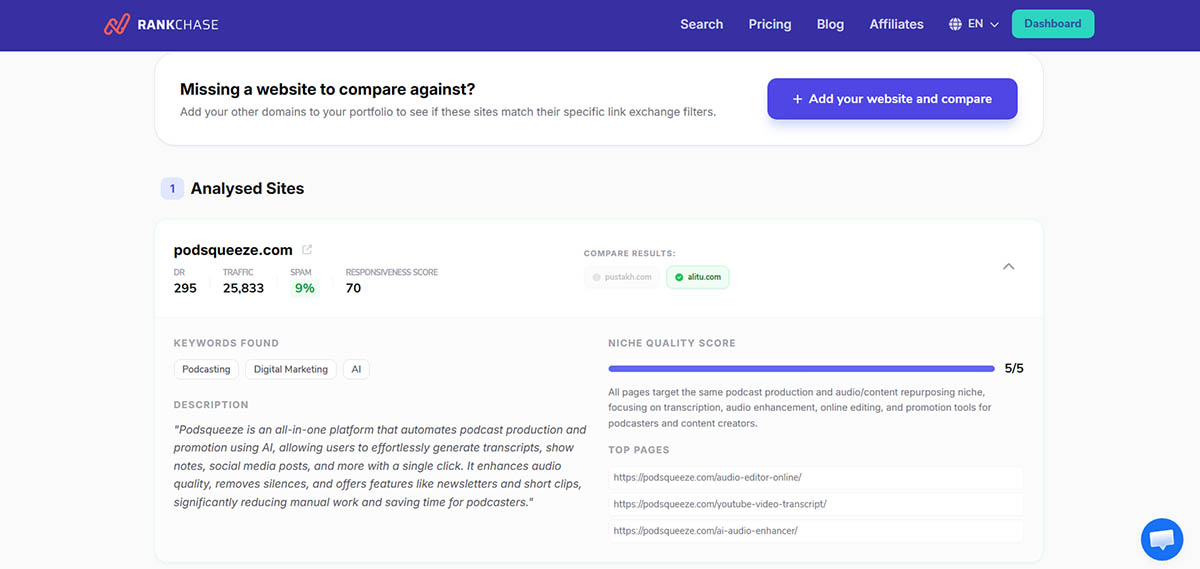
If a site has a strong score but little visible traffic, weak content, and a weird backlink profile, that score is not enough.
Semrush explicitly includes spam indicators such as unnatural dofollow ratios, imbalances between links and traffic, and too many referring domains from the same IP or network when assessing authority-like quality. Those are the kinds of patterns you should care about more than the headline number itself.
Fast vetting checklist
Before you agree to a swap, ask:
- Is the site in my niche or one step adjacent?
- Do its main pages get search traffic?
- Does the domain have a believable publishing history?
- Are outbound links selective?
- Would I still want this link if Google ignored the SEO value?
If you answer “no” to two of those, pass.
Identifying Red Flags: PBNs and Artificial Traffic
This is where a lot of link buyers get fooled.
A PBN-style site often looks polished enough on the surface. The giveaway is usually in the pattern.
Watch for:
- many sites with similar themes, layouts, or writing style
- shared IP ranges or obvious ownership footprints
- generic author names and no real brand signals
- broad unrelated topics on one domain
- suspiciously high outbound link volume
- traffic spikes disconnected from publishing activity
Semrush calls out same-IP clusters, imbalances between backlinks and organic traffic, and near-identical backlink profiles as possible signs of manipulation or private blog networks.
Artificial traffic leaves clues too. If a site claims strong traffic but engagement looks fake, rankings are thin, and branded demand is close to zero, treat the number as decoration.
If the authority looks high but the site has no visible audience, no strong pages, and too many outbound links, trust your eyes over the metric.
Reviewing the Site's Content Quality and Relevance
This step is underrated because it takes actual reading.
Open five recent articles and check:
- Is the content written for humans?
- Are there original examples, opinions, screenshots, data, or experience?
- Does the site have a clear audience?
- Are outbound links integrated naturally?
- Would your page genuinely improve the article?
Then review the specific page where your link might go. A good domain can still have bad sections.
Google’s guidance consistently emphasizes helpful, relevant linking and descriptive anchor text. If the link would feel awkward to a reader, it usually is.
I often reject sites for one simple reason: the content has no editorial care. If the site does not care about its own pages, it will not protect your link either.
Outreach Best Practices for Securing Link Swaps
Once you have a short list of solid prospects, outreach becomes a sales process with editors, founders, marketers, or site owners. The difference between a good and bad pitch is usually whether you sound like a person with a relevant idea or a template with a quota.
Crafting a Highly Personalized Pitch
A good outreach email answers three questions fast:
- Why this site?
- Why this page?
- Why this link?
You do not need a long intro. You need proof that you looked.
A workable structure:
- mention the exact page you read
- point out a gap, update, or complementary resource
- explain why your page helps their reader
- offer a fair collaboration if appropriate
Example:
I was reading your ecommerce migration checklist and noticed you included platform setup and redirect planning, but not post-migration QA. We recently published a checklist focused on crawl issues, canonicals, and internal link validation after launch. If you think it helps your readers, it could fit well in the section on launch-day checks. If useful, happy to also reference your guide in our migration resources page where we list specialist checklists for different stages.
That works better than “Hi, I love your content, can we exchange backlinks?”
A few rules I follow:
- keep emails under 150 words when possible
- mention one page, not the whole site
- pitch one clear placement idea
- avoid fake praise
- never ask for a “dofollow backlink”
Negotiating Fair and Strategic Link Placements
Once a prospect is interested, the goal is not just getting any link. It is getting the right page, right context, and right anchor.
Here is what I push for:
- link from an indexed page with relevant traffic potential
- paragraph-level contextual placement
- natural anchor text that matches the sentence
- a page that is likely to stay live and updated
Here is what I avoid:
- homepage swaps
- author bio only placements
- exact-match anchor demands
- pages labeled “partners,” “sponsors,” or “recommended sites” with dozens of links
Google recommends anchor text that is concise, descriptive, and relevant to the destination page. That is the standard to use in negotiation too.
If the other side insists on a money keyword anchor that sounds unnatural in the paragraph, that is usually where the deal stops being worth it.
Toxic Link Building Practices You Must Avoid
A big part of good link exchange work is knowing what not to touch. Some tactics are so consistently low quality that they are not worth “testing.”
Steering Clear of Link Farms and Shady Networks
A link farm is easy to spot once you know the signs. Thin sites, broad topics, endless outbound links, and zero editorial standards.
They usually pitch volume:
- guaranteed placements
- bulk swaps
- lists of “partner sites”
- fixed pricing for insertions across multiple domains
This is the opposite of what you want. Google has long warned against programs and deals built to boost visibility with minimal effort, and link spam systems are designed to reduce the impact of manipulative linking patterns.
If a network’s main selling point is scale, assume the footprint is visible.
Avoiding Spammy Web Directories
Most directories are not worth your time.
There are still a few legitimate directories tied to industries, local associations, chambers, certifications, or trusted vendors. Those can be fine because they help users find businesses.
Spammy directories look different:
- no editorial review
- every niche mixed together
- thousands of thin listing pages
- obvious paid inclusion
- no traffic, no rankings, no brand value
These links rarely send qualified traffic, and when they show up in clusters, they create exactly the kind of pattern you do not want in a backlink profile. Toxic-link auditing guidance also flags low-quality directories and coordinated directory spikes as common risk signals.
The Dangers of Over-Optimized Anchor Text
Anchor text is where good outreach gets ruined by greed.
Google’s link best practices recommend writing anchor text naturally and resisting keyword stuffing. That applies just as much to exchanged links as any other link.
A healthy anchor mix usually includes:
- brand name
- brand + topic
- article title
- natural phrase anchors
- occasional partial-match anchors where they read cleanly
Semrush also treats heavy concentrations of money-keyword and compound commercial anchors as potentially suspicious patterns.
A simple safeguard: read the anchor out loud inside the sentence. If it sounds like SEO copy instead of normal writing, change it.
Measuring the ROI of Your Link Exchange Efforts
If you do not measure outcomes, you will keep repeating the wrong partnerships.
The goal is not counting links. It is connecting placements to visibility and traffic.
Tracking Keyword Ranking Improvements
Look at rankings at the page level, not just domain level.
For each exchanged link, track:
- the destination URL
- the date the link went live
- the referring page
- target keyword cluster
- ranking movement over 30, 60, and 90 days
This helps you answer whether the page gained traction after the link, not whether the domain happened to rise for unrelated reasons.
I like a simple before-and-after log:
Do not expect every link to move rankings by itself. You are looking for patterns across quality placements.
Also keep an eye on Google Search Console for manual action issues if you have done aggressive link building in the past. That is where Google reports manual actions tied to unnatural links.
Monitoring Referral Traffic Gains
Referral traffic is the most underrated KPI in link exchanges because it tells you whether the placement has human value, not just theoretical SEO value.
In GA4, referral traffic shows the domains users visited immediately before landing on your site, which makes it useful for judging whether partner placements are sending real visitors.
A link can be a win even if rankings take time, as long as it sends qualified sessions that engage.
Check:
- sessions from the referring domain
- engagement rate or engaged sessions
- conversions or assisted conversions
- landing page performance
- whether the source keeps sending traffic over time
If a placement sends zero traffic, lives on a dead page, and produces no ranking lift after a reasonable window, that partner should drop down your priority list.
The best exchange partners tend to repeat value. Their pages rank, their audiences click, and future collaborations get easier. That is the real compounding effect you are building toward.