How Much Does a High-Quality Backlink Cost in 2026?

If you have bought links before, you already know the frustrating part. Two sites can both look like “DR 60,” but one moves rankings and the other does almost nothing.
That is why the cost of a backlink in 2026 only makes sense when you tie price to quality, relevance, and expected SEO impact, not just the invoice total.
For most businesses, a genuinely useful link now lands somewhere between $250 and $1,500+ per placement, with higher-end editorial mentions, niche authority sites, and digital PR placements running far above that. But the better question is not “what does a backlink cost?” It is “what does a backlink that can actually help rankings cost?”
As explained in Google’s spam policies, excessive link exchanges and paid links intended to pass ranking value are treated as manipulative, so quality-first judgment matters more than ever. At the same time, relevant editorial links between real sites remain a normal part of the web, and strong backlinks still help search engines understand reputation, trust, and prominence.
This guide breaks down the numbers, but more importantly, it shows how experienced teams decide what a link is worth before they spend. For a full strategic overview, see our pillar article on where to buy backlinks safely.
TL;DR
- Real Cost Benchmarks: High-quality backlinks in 2026 typically range from $250 to $1,500+, depending on DR, niche competitiveness, and editorial standards.
- The "Quality Over Metrics" Rule: A DR 70 site with no traffic or relevance is often worth less than a DR 35 niche-specific site with a real, engaged audience.
- Hidden Costs: Content production and editorial review often account for a significant portion of the price in premium placements.
- ROI-First Budgeting: Successful SEO teams calculate link budgets based on projected revenue from ranking improvements, not just cost-per-link.
- Provider Impact: In-house teams offer control but higher overhead ($600+ per link), while specialized agencies provide process maturity at scale.
Why High-Quality Backlinks Remain Critical for SEO
A good backlink still does three jobs at once.
First, it can improve your ability to rank for competitive queries by strengthening the authority signals around the page and domain. Second, it helps Google place your brand in a topical neighborhood. Third, a real mention on a relevant site can send referral traffic, assisted conversions, and brand searches later.
That last point gets missed a lot. The links that tend to age well are usually the ones that still make sense even if Google did not exist. If a relevant audience would click it, trust it, and act on it, the placement is usually on firmer ground.
In practice, the SERPs are getting less forgiving. Thin guest posts on generic sites are easier to spot, easier to ignore, and often harder to justify after the fact. According to Google’s helpful content guidance, useful content, clear authorship, real expertise, and trust signals around the page matter most. A backlink placed inside weak content is simply less likely to hold value over time.
Here is the practitioner rule I use:
A high-quality backlink is not just a link from a strong domain. It is a relevant link on a page that deserves to rank, on a site that deserves to be trusted.
That is why backlink pricing rose in the last few years. You are not just paying for a URL insertion. You are paying for one of three things:
- Access to a real site with standards
- Content good enough to earn placement
- Outreach effort to secure the mention without burning the domain list
If one of those pieces is missing, the “cheap” link usually becomes expensive later because it fails to move rankings or creates cleanup work.
What Variables Dictate the Price of a Link?
Once you stop treating links like commodities, pricing becomes easier to understand. The market is basically charging for scarcity, trust, and labor.
Domain Authority and Traffic Metrics
Most link sellers lead with DR because it is easy to understand. As detailed in Ahrefs' definition of Domain Rating, it is a 0 to 100 score showing the relative strength of a website’s backlink profile, but it is a relative metric, not a standalone quality score.
That matters because plenty of overpriced links hide behind a pretty metric.
When I vet a placement, I look at metrics in this order:
A DR 35 niche site with real traffic and clean editorial standards can easily be worth more than a DR 70 site that exists to sell placements.
Also remember the page-level reality. Since URL Rating (UR) measures page-level strength, a strong domain can still have weak pages that nobody crawls or visits.
Industry and Niche Competitiveness
Niche changes pricing more than many buyers expect.
If you operate in SaaS, legal, finance, gambling, health, or high-ticket B2B, your costs go up for a simple reason: the same publishers get approached constantly, and the value of rankings in those sectors is high.
That creates a compounding effect:
- More competition for the same publishers
- Higher editorial skepticism
- Greater need for expert content
- Higher risk if the site accepts too many obviously sponsored placements
A home services brand might secure a solid local-industry placement for a few hundred dollars. A cybersecurity or personal finance company might need several times that amount for a comparable quality threshold because the publisher knows the commercial value of the niche.
This is also where relevance beats raw authority. If you are in a difficult niche, it is usually smarter to buy fewer, tighter-fit placements than to spray budget across generic “business blogs.”
Editorial Standards and Content Production
A large share of link cost is hidden in content work.
Publishers with standards want usable articles, original angles, clean formatting, internal fit, and sometimes expert review. If they are writing the article themselves, you are effectively paying for editorial labor. If you are supplying the article, the publisher still has to review and protect the site.
That is why there is often a big gap between:
- a link insertion on an existing post
- a guest post on a lightly moderated site
- a true editorial feature built around a strong pitch
And in 2026, content quality matters even more because low-effort third-party content is exactly what Google targets in its site reputation abuse policies. Publishers are more careful now, especially larger sites and category leaders.
A useful pricing shortcut is this:
- If the site accepts almost anything, the link should be cheap and you should be skeptical
- If the site asks real questions, edits hard, and rejects weak submissions, the link will cost more and is usually more defensible
2026 Price Benchmarks: Cost by Domain Rating (DR)
Let’s get to the ranges people actually want.
These are not fantasy “market averages.” They are practical buying ranges for placements that clear a basic quality threshold. If you are seeing prices dramatically below these, quality is often where the discount came from.
Entry-Level to Mid-Tier Placements (DR 30-50)
For a real DR 30 to 50 site with topical relevance, some organic traffic, and decent editorial hygiene, the typical 2026 price range is:
- $250 to $600 for a straightforward placement
- $400 to $800 if the site is niche-relevant and selective
- $800+ if traffic is strong and the site has obvious commercial demand
This tier is where many small and mid-sized companies should live. You can usually build momentum here without overpaying for vanity placements. It's also where you're most likely to encounter link building marketplaces that offer access to these mid-tier domains.
What I like about this bracket is efficiency. A DR 40 industry site that publishes useful content and has stable traffic can still move mid-competition pages, especially when the target page already has good on-page SEO and internal links.
A simple buying heuristic:
- Buy here if your site is still building authority
- Avoid paying premium rates here unless the topical fit is excellent
- Do not confuse “cheap and available” with “good value”
If you are quoted $150 for a DR 45 link, look for the catch. It is usually one of these: weak traffic, irrelevant topic, obvious link-selling footprint, or AI-generated filler content.
Premium and High-Authority Mentions (DR 60-90+)
This is where costs spread out fast.
For DR 60+ placements, the usual 2026 range is more like:
- $700 to $1,500 for quality niche or industry authority sites
- $1,500 to $3,500+ for premium publishers, strong brands, or hard-to-access editorial environments
- $3,500 to $10,000+ when digital PR, proprietary data, or journalist outreach is involved
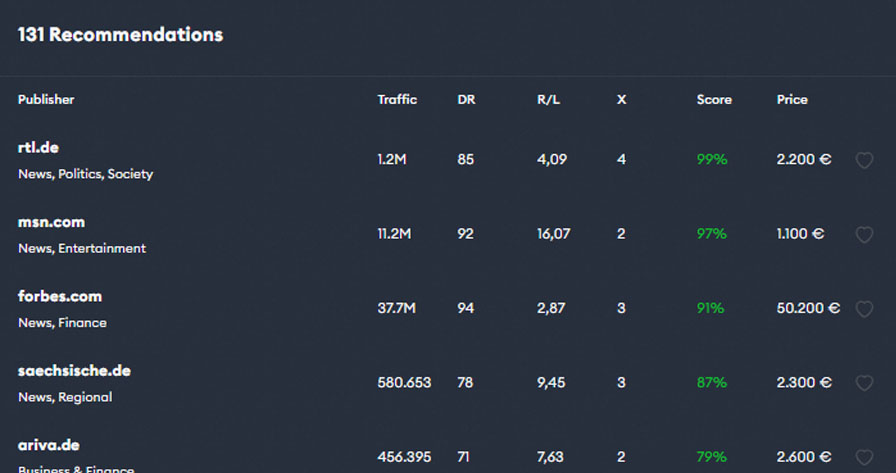
At this tier, you are often paying for scarcity more than link mechanics. The site may have:
- tighter editorial review
- stronger brand risk controls
- higher internal demand from advertisers and agencies
- stricter standards on who gets covered and why
This is also where many teams overspend. A DR 80 mention is exciting, but if it is weakly relevant and buried on a low-value page, it may produce less SEO lift than two or three better-fit links from strong niche publications.
So before paying premium rates, ask three things:
- Will this page itself be valuable six months from now?
- Does the site genuinely cover this topic?
- Would I still want this mention for brand credibility or referral traffic?
If the answer is no across the board, you are probably buying the metric more than the link.
Comparing Link Building Costs by Provider Type
The same link can cost wildly different amounts depending on who builds it and how their economics work.
Building and Managing an In-House Team
In-house link building looks cheaper on paper until you account for all the moving parts.
A real in-house setup usually includes some combination of:
- outreach and partnership management
- content production
- SEO strategy and qualification
- prospecting and data cleanup
- reporting and QA
Even before software, a capable SEO or outreach hire in the U.S. can easily sit in the $80,000 to $90,000+ annual range, and software developer support is much higher if you need internal tools or automation help. Glassdoor's SEO salary data confirms that U.S. SEO specialist compensation is substantial, while software developer median pay is even higher.
Now translate that into cost per acquired link.
If one in-house hire costs $90,000 fully loaded and produces 12 strong links per month after ramp-up, your rough labor cost is already around $625 per link before content, tools, and management overhead. If output drops to 6 links per month, your labor cost doubles.
In-house is best when you need:
- ongoing relationship building in one niche
- tight brand control
- repeatable systems over 12+ months
- coordination with content, PR, and product marketing
It is usually a poor fit if you only need a small campaign or you still do not know what a “good link” looks like in your vertical.
Hiring Independent SEO Freelancers
Freelancers are the best option when you need flexibility and know how to manage quality.
Market rates vary, but Upwork's SEO cost guide positions stronger SEO specialists at higher rates when the work requires proven outcomes rather than commodity execution.
What freelancers do well:
- filling process gaps
- doing outreach and qualification
- sourcing placements in a niche they already know
- handling one-off campaigns without full-time overhead
What goes wrong:
- no clear quality rubric
- incentives tied to quantity
- reliance on recycled publisher lists
- weak reporting on how links were earned
If you hire a freelancer, give them a simple operating brief:
Target pages, anchor guardrails, disallowed niches, minimum relevance standard, and examples of links you would proudly show a client.
That one document saves a huge amount of money.
Partnering with Specialized Link Building Agencies
Agencies usually cost more per link, but sometimes less per useful outcome.
A good agency has existing systems for prospecting, outreach, content production, QA, and publisher relationships. That lowers execution risk. It also means you are paying for margin, account management, and process maturity.
Typical agency economics in 2026 look something like this:
- $1,500 to $5,000+ per month for smaller campaigns
- $300 to $1,200+ per acquired link in standard authority campaigns
- much higher for digital PR, data-led campaigns, or competitive verticals
The value question is simple. Are they saving you time while maintaining quality, or are they just reselling a database?
Ask for examples that show:
- the actual linking page
- why the site was selected
- whether content was created from scratch
- what the anchor strategy looked like
- what happened after placement
If they cannot explain link selection clearly, they are probably managing vendors, not strategy.
White-Label Services for Resellers
White-label providers serve agencies and consultants who need link fulfillment without building the whole machine internally.
This model can work well, but it has the highest risk of quality drift because the buyer is often one step removed from the placement itself.
You usually see lower unit prices here because the system is built for scale. That can be fine if quality controls are strict. It becomes dangerous when fulfillment teams optimize for link count, not outcome.
For resellers, the safe workflow is:
- set non-negotiable quality filters
- review sample placements manually
- reject generic sites even if metrics look strong
- separate “client-facing reporting” from “vendor-provided labels”
- track rankings and page-level lift, not just delivered URLs
If you need a faster way to source relevant collaboration opportunities, a platform like Rankchase can help narrow the field by analyzing relevance, DR, traffic patterns, and spam signals before you spend time on outreach. The point is not to automate judgment away. It is to reduce the amount of bad inventory you look at in the first place.
Expected Pricing Based on the Link Building Strategy
Provider type affects cost, but strategy affects value even more. Two links with the same invoice amount can have very different risk and upside depending on how they were earned.
Traditional Guest Posting and Content Placements
This is still the most common commercial link building model because it is predictable.
Typical 2026 pricing:
- $250 to $900 for standard guest post placements on legitimate mid-tier sites
- $900 to $2,000+ when the site is selective, niche-relevant, or traffic-rich
- higher if writing, editing, or expert review is included
Guest posting works best when the article genuinely belongs on the host site. It performs worst when the post exists only to carry anchor text.
A strong placement usually has:
- a topic the audience actually cares about
- a natural contextual link
- original writing with clear fit for the publication
- a target page that deserves the citation
A weak placement usually has the opposite: broad title, vague advice, no author credibility, and a random commercial link forced into paragraph three.
If you buy guest posts, use this short checklist:
- Would this article exist without my link?
- Does the host site have a real audience for this topic?
- Is the destination page genuinely useful to readers?
- Would I be comfortable with this page getting reviewed manually?
If two or more answers are no, skip it.
High-End Digital PR and Asset Creation
This is the expensive route, but it is also where the best links often come from.
Digital PR campaigns usually bundle several cost layers:
- ideation
- data sourcing
- survey or analysis work
- design and asset production
- journalist or editor outreach
- follow-up and reporting
That is why campaign pricing often starts around $3,000 to $10,000 and can go much higher. You are not purchasing one link. You are funding a story or asset that can earn multiple mentions.
The upside is strong when you have something worth pitching:
- original data
- industry benchmarks
- expert commentary with real authority
- a useful tool, calculator, or framework
- a timely angle connected to your niche
Since Google’s helpful content guidance rewards original information and research, this strategy lines up well with what stronger publishers actually want to reference.
Digital PR is ideal when:
- your niche has journalists or trade publications that regularly cite sources
- your average customer value is high
- you can reuse the asset in sales, social, and email
- you care about both links and brand visibility
It is a bad fit when you only need a handful of steady authority links and have no story worth telling.
Resource Page and Broken Link Outreach Mentions
These are often cheaper in cash and heavier in labor.
Typical costs depend more on time than placement fees:
- $100 to $400 per successful link if handled efficiently at scale
- much more in labor if the niche has low response rates
- often lower direct placement costs than guest posting
This strategy works when you already have a page worth linking to. That could be a guide, template, glossary, study, tool, or curated resource.
Broken link outreach still works best in narrow verticals where the replacement is obvious and useful. Resource page outreach works best when your asset clearly solves the page owner’s need.
The mistake people make is trying this with weak content. If your page is just a commercial landing page disguised as a “resource,” outreach conversion collapses.
A simple mini-workflow:
- Find pages already linking to similar resources
- Qualify for topic fit and upkeep quality
- Improve your asset before outreach
- Personalize the pitch around relevance, not flattery
- Track reply rate, placement rate, and page-level ranking lift
This route is slower, but it can produce some of the cleanest links in a campaign because the placement logic is easy to defend.
Calculating ROI and Planning Your 2026 Link Budget
This is where good teams separate themselves from buyers who are just collecting domains.
Your budget should start from ranking opportunity and revenue math, then work backward into link targets.
Forecasting Revenue from Ranking Improvements
Here is the simplest ROI model I use.
Start with one target keyword cluster and estimate:
- current monthly impressions
- current click-through rate
- expected click-through rate at the target rank
- conversion rate from organic traffic
- average order value or pipeline value
Example:
- Keyword cluster search opportunity: 8,000 searches/month
- Current average position: #11
- Target after stronger links and on-page improvements: #5
- Estimated CTR gain: from 1.5% to 6%
- Additional visits: 360/month
- Conversion rate: 2.5%
- Additional conversions: 9/month
- Average value per conversion: $300
Projected monthly upside = $2,700
If it takes $6,000 in links and supporting content to get there, payback is a little over two months after the ranking sticks.
That is not perfect forecasting, but it is far better than buying links because competitors seem to be doing it.
Ideal Scenarios for Paid Link Acquisition
Paid link acquisition makes the most sense when all three of these are true:
- The target page already has strong on-page fundamentals
- You are ranking close enough to benefit from authority gains
- The commercial upside clearly exceeds the acquisition cost
If your page is stuck on page five because the content is weak, links are not your first move.
If your page is already in positions 6 to 15 for valuable queries and the SERP leaders have stronger referring domains and better link equity, that is where links often create real movement.
Good scenarios:
- commercial pages sitting just outside top five
- linkable assets that need initial traction
- new sites in expert-led niches with credible content but weak authority
- competitive category pages with proven conversion value
Bad scenarios:
- pages with poor search intent match
- thin affiliate or doorway-style content
- broad homepage link building with no target page strategy
- campaigns measured only by DR gained
Smart Ways to Distribute Your SEO Spend
Most companies waste money by going all-in on one type of link.
A smarter 2026 budget usually spreads spend across four buckets:
- Foundation links from relevant mid-tier sites
- Selective authority placements for trust and competitive lift
- Linkable asset development so outreach converts better
- Process and QA to avoid paying for junk
For a mid-sized business, a practical monthly allocation might look like this:
That mix changes by company stage. A newer site may need more foundational placements. An established brand may get more from digital PR and partnership-driven mentions.
One last budgeting rule that has saved a lot of campaigns:
Never commit to a large link budget until you know your cost per ranking lift, not just your cost per link.
Sometimes five strong links beat twenty average ones. Sometimes a collaboration, expert contribution, or relevant exchange between closely aligned sites does more than a paid placement because the contextual fit is better. As noted in Google’s link schemes guidance, excessive exchange schemes are discouraged, but selective, editorially sensible cross-linking is a normal part of the web.
If you want a practical target, most serious SEO programs in 2026 should aim for fewer links, better pages, tighter relevance, and cleaner review standards. That is what tends to survive updates, justify budgets, and compound over time.