Are Paid Editorial Backlinks on Sites Like HackerNoon Worth It in 2026?

Buying an editorial placement on a recognizable publication sounds attractive for a reason. You get your brand on a site people already trust, you can point to a real article instead of a sidebar ad, and the domain metrics often look strong enough to justify the invoice.
I’ve seen why this sells. A founder wants a quick authority lift, an SEO lead needs links on this quarter’s report, and an agency wants something that looks safer than private blog network junk. Paid contributor placements sit right in that gap.
But if your actual question is “Will paying for an editorial backlink on a site like HackerNoon move rankings enough to justify the cost?”, you need a more disciplined answer than “high DR equals good SEO.”
For most teams, the honest answer is this: the branding value can be real, the referral value can be real, but the pure SEO upside is often overstated, inconsistent, or deliberately neutralized by link attributes and platform policies. As explained in Google’s Search Essentials, manipulative link schemes and paid links intended to pass ranking signals are treated as violations.
So let’s break this down the way a working SEO would. Not as theory, but as a buying decision. If you're looking for a more comprehensive strategy, check our guide on where to buy backlinks safely in 2026.
TL;DR
- Branding > SEO: Paid editorial placements on major platforms are often better for credibility and referral traffic than for raw ranking power.
- Link Attributes Matter: Most top-tier sites like HackerNoon apply
rel="sponsored"orrel="nofollow"to branded content, neutralizing direct PageRank transfer. - Strict Guidelines: Platforms have evolved complex rules to prevent link manipulation; for instance, HackerNoon's backlink guidelines limit promotional links and prohibit selling them.
- The "Contributor Graveyard": Many paid articles end up in low-visibility archives that are rarely crawled or discovered by real users.
- Decision Rule: Only pay for these placements if the publication is genuinely relevant to your audience and you value the brand association regardless of SEO impact.
Understanding Paid Editorial Backlinks on Contributor Platforms
A paid editorial backlink on a contributor platform is usually one of three things:
- A sponsored article written for or by a brand
- A contributor post that includes one or more brand links
- A republished piece that gets exposure on the publication while linking back to the original source
Those are not the same, and lumping them together is where a lot of bad decisions start.
On paper, they all look like “editorial links on authority sites.” In practice, their SEO value depends on details that buyers often skip: whether the link is crawlable, whether it carries rel="sponsored" or nofollow, whether the page is indexed, whether the article sits in a thin contributor section, and whether the site is packed with similar outbound commercial links. According to Google’s guidance on qualifying outbound links, sponsored outbound links should be qualified with attributes like sponsored or nofollow.
That means you should stop evaluating these placements as “Do I get a backlink?” and start evaluating them as “What kind of page is this, how is the link treated, and what outcome am I actually buying?”
A simple operator-level test helps:
If you cannot answer those five questions before purchase, you are not evaluating a placement. You are gambling on a metric screenshot.
Why SEOs and Brands Buy Links on High-Authority Sites
People do not buy these placements by accident. They buy them because the pitch is emotionally convincing and, sometimes, commercially useful.
Instant Access to High Domain Rating (DR)
This is the fastest hook in the sales pitch.
A vendor shows a site with strong Domain Rating, solid branded search visibility, and a name your client recognizes. Compared with building links the slow way, paying for a placement feels efficient. You skip prospecting, skip cold outreach, and skip the uncertainty of digital PR.
The problem is DR is a domain-level third-party metric, not a guarantee that your specific page or link will pass meaningful ranking signals. A weak contributor page on a strong domain can still have limited value. If the page earns no links, gets no traffic, sits far from the site’s core architecture, and includes multiple commercial outbound links, the practical SEO impact can be underwhelming.
This is where intermediate SEOs usually get burned. They buy the domain, but what they actually receive is a low-attention URL on that domain.
If you are evaluating a placement for SEO, use this mini-workflow before paying:
- Search whether similar contributor pages on that site are indexed.
- Check whether those pages attract any external links or organic traffic.
- Review the publication’s outbound link policy.
- Inspect whether past brand posts use
nofolloworsponsored. - Ask whether the article will live in a category that actually gets crawled and discovered.
If you skip step 4, you can easily pay premium rates for a link that Google is being directly told to treat as sponsored. That is exactly what some major platforms require for paid or branded content. As noted in HackerNoon’s business blogging FAQ, paid, sponsored, or branded content links are not dofollow and should carry rel="sponsored" or at least nofollow.
Perceived Brand Trust and Authority
This is the stronger argument, and it is often the real reason these placements retain value.
A recognizable publication can help with sales credibility, investor optics, partner confidence, and audience trust. If your startup is trying to look established, “featured on a known tech publication” can help more than a raw link metric ever will.
That matters most when the publication matches your market. A cybersecurity company on a respected tech site can gain more from perceived relevance than from raw PageRank transfer. The placement gives you something your sales team can reference, your founder can share, and prospects can read without feeling like they landed on a press release graveyard.
But there is still a decision rule here: if your main goal is trust, measure trust outcomes. Look for branded search lift, assisted conversions, referral visits, time on page, demo requests, newsletter signups, or direct mentions in sales calls.
If none of those outcomes matter to you, then “brand authority” is probably just a prettier label for “I hope this link boosts rankings.”
Do Purchased Editorial Links Actually Boost Rankings?
Sometimes they do. Often they do less than expected. And in many cases, they are set up so the SEO value is intentionally limited.
That distinction matters because there are agencies selling these placements as if every editorial-looking page behaves like a naturally earned citation from a journalist. It does not.
The Dofollow vs. Nofollow Dilemma on Major Publications
This is the first thing I would verify before discussing price.
A lot of buyers assume that if an article appears on a high-authority publication, the outbound links must be dofollow. That is outdated thinking. Major publications and contributor platforms increasingly qualify paid and branded links because Google explicitly recommends doing so for sponsored arrangements.
HackerNoon is a useful example because many marketers still talk about it like a classic authority-link opportunity. But its published guidance makes the commercial reality pretty clear:
- HackerNoon has strict backlink rules for brand and contributor content, including diversity requirements and limits on links to a brand’s own site.
- It states that paid, sponsored, or branded content links should not be dofollow.
- It also warns against selling promotional backlinks and says changing or adding promotional links after publication can lead to bans and removal of articles.
So if someone is selling you a “guaranteed authority backlink” on a platform with rules like that, you should ask a blunt question: Are you buying visibility on the platform, or are you buying PageRank? Those are very different products.
If the placement is paid and the publication properly marks outbound links as sponsored or nofollow, treat the SEO gain as limited and the branding gain as primary.
That does not make the placement useless. It just means the value case needs to be honest.
Short-Term Ranking Spikes vs. Long-Term SEO Helpfulness
Short-term spikes happen for a few reasons.
Sometimes the linked page gets a temporary crawl boost because Google discovers it through a fresh page on an authoritative domain. Sometimes the anchor text lines up neatly with an already-rising page. Sometimes the effect is less about authority transfer and more about your overall link velocity looking healthier for a while.
But the longer-term question is whether the placement keeps helping after the novelty fades.
In real campaigns, the links that keep paying off usually have these traits:
- They sit on pages that continue earning impressions and links
- They are contextually relevant to the target page
- They are not one of ten commercial links on a contributor article
- They would still make sense if Google ignored the link entirely
That last point is important. It is the easiest sniff test for manipulative placements.
If the article has no real audience fit, no original insight, and no reason to exist except to host your anchor text, you may see a temporary bump, but you are unlikely to build durable advantage. According to Google’s Search Essentials, manipulative linking is actively detected by link spam systems, which can identify both buyers and sites used to pass outgoing links.
The Major Risks of Paying for Backlinks
The risk is not just “Google might penalize you.” That is too vague to be useful.
The real risks are operational, financial, and strategic. You can waste budget, build a fragile backlink profile, and convince your team that a bad channel is working because the reporting window is too short.
Violating Google's Spam Policies and Manual Actions
Google is not subtle about its position here. Paid links intended to manipulate rankings fall under spam and link scheme concerns. According to Google’s Search Essentials, violations can cause lower rankings or omission from Search, and manual actions may require cleanup and reconsideration.
Now, in practice, not every paid placement triggers a manual action. Most do not. The more common outcome is quieter than that: Google simply ignores the links or heavily discounts them.
That still hurts, because the budget is gone.
A practical risk filter looks like this:
- If a vendor promises ranking gains from paid placement on a site that marks paid links as sponsored, walk away.
- If the article topic is only loosely connected to your site, expect weak downstream value.
- If the seller controls many “editorial” placements across unrelated publications, assume you are looking at a scaled media-selling operation, not a genuine editorial opportunity.
- If the page reads like a landing page in paragraph form, do not expect it to age well.
There is also a brand risk people underestimate. If the content feels forced, the publication fit is weak, or the article is obviously self-promotional, the placement can make you look smaller, not bigger.
Link Equity Dilution in Crowded Contributor Networks
Even when a paid editorial placement is technically live and indexed, you still have dilution to worry about.
Contributor networks often suffer from the same structural problem: too many commercially motivated posts, too many outbound links, and too little true editorial selectivity. Even on legitimate platforms, sections that attract marketers can get crowded fast.
HackerNoon’s backlink guidelines try to control this by limiting how many links a brand can point to its own site and requiring link diversity. That is good for the platform, but from a buyer’s perspective it also means you cannot assume a simple “pay fee, get strong link equity” outcome.
Here is the practical issue. Link value is not infinite. When your article sits in a network of similar contributor pages, each with commercial intent and limited external citations, the SEO upside gets thinner.
This is where relevance beats raw authority.
A tightly relevant mention on a smaller but trusted site can outperform a generic contributor placement on a giant domain, especially when the smaller site has an engaged audience and cleaner outbound linking patterns.
That is also why relevance-first partner discovery tends to hold up better over time. If you are building collaboration-driven links, brand mentions, or guest contributions, filtering for topic fit, traffic quality, and spam indicators usually produces more durable wins than chasing the biggest logo. A platform like Rankchase fits that workflow when you need a faster way to surface niche-relevant sites without defaulting to mass outreach.
A Closer Look at HackerNoon and Similar Tech Blogs
HackerNoon is useful to study because it sits in the middle ground between pure publication and open contributor ecosystem. That makes it a good case for understanding what these placements are actually worth.
Platform Editorial Standards and Review Processes
HackerNoon does not present itself as a free-for-all link dump. Its public guidance shows real editorial controls around submissions, backlinks, republishing, and brand content.
A few details matter here:
- It has published backlink rules limiting promotional links and requiring source diversity.
- It warns that selling promotional backlinks is not allowed.
- It supports canonical links for certain republished content scenarios, especially for personal sites in good standing.
- It states that paid or branded content links should be sponsored or nofollow.
That combination tells you two things.
First, HackerNoon is trying to protect platform quality. Second, if you are buying a placement there purely for link juice, you are probably misreading the product.
A better way to think about HackerNoon is this:
- Good for tech audience exposure
- Sometimes good for republishing and founder distribution
- Potentially useful for credibility and referral traffic
- Not a place I would underwrite as a reliable dofollow ranking play
And this same logic applies to similar tech blogs with contributor programs. The question is not whether the domain is strong. The question is whether the platform’s content model gives your specific article a real chance to earn attention.
Measuring Non-SEO Value: Referral Traffic and Visibility
This is where some placements do justify themselves.
If your audience actually reads the publication, a solid article can send qualified traffic. Not viral traffic, not giant traffic, but the kind that matters. Engineers, founders, technical buyers, and niche communities often convert better than broader audiences because the intent is cleaner.
HackerNoon’s business blogging FAQ highlights distribution, readership, and engagement visibility as part of the offering. I would still verify actual performance expectations on a case-by-case basis, but the broader point stands: a paid editorial placement can work as a distribution asset even when it is weak as a ranking lever.
Track it like a media buy:
- Add UTMs to the destination URL
- Measure sessions, engaged time, assisted conversions, and branded search lift
- Track whether the article ranks for problem-aware queries
- Check whether other sites cite or reference it later
- Ask sales whether prospects mention seeing it
If the placement drives qualified visits and helps your brand story, it may be worth buying. Just do not book it under “SEO backlinks” and expect the spreadsheet to tell the full truth.
Real-World Experiences and Case Studies
Most people asking about paid editorial backlinks are not trying to debate policy. They want to know what happens when money leaves the account.
What Happens When You Spend Hundreds on Editorial Links
A very common outcome looks like this:
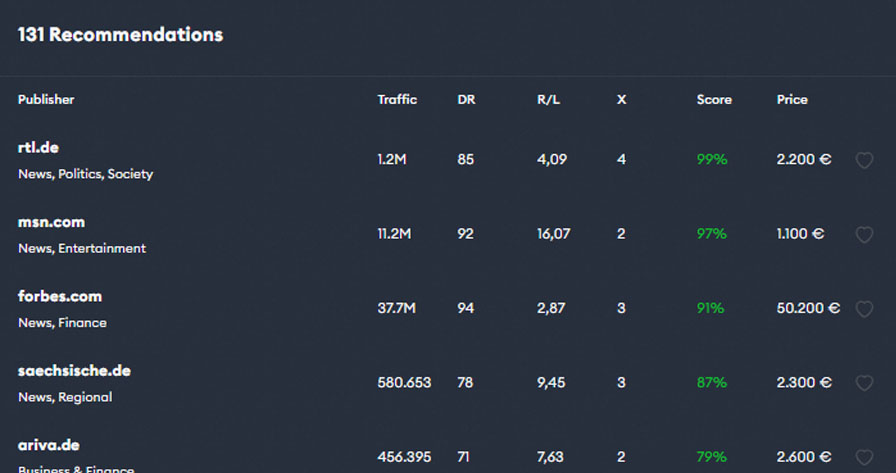
You spend $300 to $1,500 on a contributor-style placement. The article goes live on a strong domain. For a few weeks, the team feels good because the link tracker lights up, the DR report looks prettier, and maybe the target page gets a small movement.
Then one of four things happens.
Scenario 1: The link is qualified
The publication applies sponsored or nofollow, so the ranking impact is small. You still may get branding or referral value, but the SEO payoff is modest.
Scenario 2: The page has weak visibility
The article is live, but buried in a low-traffic archive. It gets indexed, then barely seen by users or crawlers.
Scenario 3: The article is too promotional
It technically passes review, but reads like soft advertorial content. It attracts no natural links, no discussion, and no secondary pickup.
Scenario 4: The placement actually helps, but not for the reason you expected
The article gets shared by your team, picked up in newsletters, quoted in a sales deck, and referenced by a prospect. That turns the placement into a useful content asset, but the value came from distribution and trust, not from raw link equity.
I have also seen the opposite outcome. Teams buy several of these placements, see minor ranking movement, then conclude the tactic works at scale. Six months later, they are stuck with a backlink profile full of mediocre contributor URLs and very little durable lift.
That is why I recommend a simple post-purchase review after 45 to 60 days:
Short checklist for evaluating a paid placement
- Was the page indexed and still indexed after a month?
- Did the destination page gain meaningful rankings, not just one-day volatility?
- Did the placement send qualified referral traffic?
- Did any secondary mentions or links appear after publication?
- Would you still buy it if Google ignored the link completely?
If the answer to the last question is no, you probably bought it for the wrong reason.
Sustainable Alternatives to Buying Editorial Placements
If your goal is durable SEO performance, buying editorial placements should be a supporting tactic at most, not the core system.
The better path is slower, but it compounds.
Earning Mentions Through Digital PR
Digital PR works because it creates links as a byproduct of something newsworthy, useful, or data-backed.
That does not require massive campaigns. In B2B and SaaS, some of the best-performing assets are still simple:
- Original benchmark data
- Short industry studies
- Founder commentary tied to a timely shift
- Free tools with clear utility
- Visual explainers journalists and writers can cite
The workflow is straightforward:
- Pick a topic with existing journalist or industry demand.
- Create a source-worthy asset, not a generic blog post.
- Build a targeted outreach list based on relevance, not just authority.
- Offer the angle, data point, or quote that fits each contact’s beat.
- Repurpose wins into on-site assets and sales enablement.
This is harder than paying for a placement, but it produces links that are far easier to defend long term because they usually have a real editorial reason to exist.
Authentic Guest Blogging and Relationship Building
Guest posting still works when people stop treating it like a commodity.
The useful version is not “buy a slot and insert anchor text.” It is build relationships with adjacent sites, contribute something their audience actually wants, and link where it helps the reader.
That means:
- Choosing websites that overlap with your niche
- Pitching topics the editor would plausibly accept without payment
- Writing something better than what is already on the site
- Linking sparingly and contextually
- Treating the collaboration as the start of a relationship, not a one-off transaction
This is also where selective partnership workflows help. If you need to find relevant sites for collaborations, guest contributions, or brand mentions, it is reasonable to use filtering tools instead of starting from a blank spreadsheet every time. The important part is the filter logic: niche fit, traffic quality, editorial standards, and low spam signals before authority metrics.
That principle matters whether you use manual research, outreach databases, or a discovery tool.
Final Verdict: Should You Pay for These Backlinks?
If you are paying for a placement on a site like HackerNoon because you want brand visibility in front of the right audience, the purchase can make sense.
If you are paying because a seller promised safe, repeatable ranking gains from a high-DR editorial link, you should be skeptical.
Here is the practical decision rule I would use:
Pay for the placement when all three are true:
- The publication is genuinely relevant to your audience
- The article itself will be worth reading and sharing
- You would still value the placement even if the SEO benefit were limited
Do not pay when any of these are true:
- The only justification is Domain Rating
- The link treatment is unclear or obviously qualified for sponsored content
- The page will live in a low-visibility contributor graveyard
- The content exists only to push anchor text
Google’s guidance is clear that paid links intended to manipulate rankings are risky, and sponsored arrangements should be qualified appropriately. Platforms like HackerNoon publicly reflect that reality in their own publishing rules.
So yes, these placements can be worth the cost. Just usually not for the reason they are being sold.
Buy them as media, credibility, and distribution assets.
Build your real SEO growth on relevance, strong content, earned mentions, and selective partnerships that would make sense even if nobody were counting links.