What Drives Backlink Price Inflation in SEO Today?

Link building got more expensive because the easy inventory dried up.
A few years ago, you could still find publishers who would take a low fee, post thin guest content, and pass a dofollow link with barely any questions. That market still exists, but much of it is now worthless, risky, or both. Google has kept tightening its stance on link spam, paid placements, and manipulative exchange patterns, while publishers have become far more aware of what their pages are worth. Google’s link qualification guidance explicitly states that paid links should be qualified with rel="sponsored" and that excessive link exchanges are link spam.
At the same time, brands still need links.
That tension is exactly why prices keep climbing. Demand has stayed strong, but the number of links that are actually worth buying, earning, or negotiating has shrunk. If you have managed outreach campaigns yourself, this pattern feels obvious: you send more emails, get fewer positive replies, pay more for serious sites, and reject a much larger share of opportunities because they fail basic quality checks.
This article breaks down what is pushing backlink prices up, how links are being valued now, where the real risk sits, and how to make smarter decisions when the market feels overheated. It's part of our broader guide on where to buy backlinks safely in the current SEO landscape.
TL;DR
- Supply squeeze: “Cheap” inventory still exists, but much of it is now ignored, risky, or both—so buyers compete for a smaller pool of placements that pass basic quality bars.
- Policy + reputation risk: Google’s link schemes guidance and site reputation abuse rules make legitimate publishers more selective, which raises price.
- Labor math: Aira’s link-building survey takeaways still anchor the reality that 1–2 hours per acquired link is common before you count tooling, rejections, and compliance.
- Metric vs. page reality: DR/DA without topic fit, traffic shape, and outbound discipline is how teams overpay—editorial placements cost more because they are harder to manufacture and age better.
- Budget reallocation: Split spend across high-confidence placements, linkable assets, and partnerships; if discovery is the bottleneck, pair manual review with filtering workflows like Rankchase and the vetting lens in where to buy backlinks safely.
Understanding the Current Backlink Market and Its Value
Why High-Quality Links Remain Essential for SEO Success
High-quality links still matter because they help search engines interpret trust, relevance, and page importance. Google has never reduced SEO to links alone, but strong referring domains continue to separate pages that rank from pages that stall. Large-scale correlation studies still show a positive relationship between referring domains and search visibility, even though links only work when the page itself deserves to rank, as summarized in Ahrefs’ SEO statistics overview.
In practice, one relevant link from a real site can outperform ten “SEO links” from pages nobody reads.
That is the part many buyers miss. They are not paying for the hyperlink itself. They are paying for a combination of editorial trust, topical alignment, crawlable placement, and the probability that Google will count the signal at all.
Here is a simple field rule I use when sizing up a link:
- If the linking page could plausibly send qualified referral traffic, it has a chance to be valuable.
- If the site has a real audience in your topic, the link is worth deeper review.
- If the placement exists only to host outbound links, assume the SEO value is close to zero until proven otherwise.
That filter saves money fast.
It also explains why prices rise at the top end. Genuine sites with standards are limited inventory. They have editors, brand concerns, legal review, content guidelines, and existing demand from marketers. You are competing for a scarce asset, not buying a commodity.
The Dramatic Shift from Link Quantity to Link Quality
Modern link building is no longer a volume game for anyone who wants durable rankings.
Google’s systems have spent years getting better at discounting manipulative patterns, and Google has said for a long time that paid links and link exchange tactics are made less effective by its spam systems. In one official webspam report, Google said more than 90% of link spam was caught by its systems.
So the market changed in a predictable way.
Low-grade links became easier to ignore algorithmically. High-grade links became harder to get. That pushed budgets upward.
You can see the shift in how experienced teams now talk internally. They ask:
- Is the site actually relevant?
- Does it rank for real keywords?
- Does the page get indexed quickly?
- Are outbound links selective?
- Would we still want this mention if Google passed zero value?
That last question is underrated. If the answer is no, the placement is probably being justified by metrics alone.
A practical way to think about today’s market is this:
If your strategy still rewards link count over link quality, inflation will feel worse because you will keep paying for assets that do not compound. Understanding how much backlinks cost on average can help you set more realistic expectations for your campaigns.
Core Factors Driving Backlink Price Inflation
Google’s Algorithm Updates and Stricter Spam Policies
Backlink inflation is partly a risk premium.
As Google has sharpened its spam policies, the value gap between a credible placement and a manipulative one has widened. Google’s spam policies explicitly define link spam as links created primarily to manipulate rankings and list excessive link exchanges and paid links that pass ranking credit as examples. Google also recommends marking paid placements with rel="sponsored", with nofollow still acceptable in many cases.
That matters because it changes supply.
A publisher willing to sell easy dofollow links at scale either becomes more cautious or drifts into a lower-quality seller pool. Meanwhile, legitimate sites that care about compliance, reputation, and editorial control become more selective. Selectivity raises price.
There is another angle here that people underestimate: site reputation risk.
Google clarified its site reputation abuse policy in late 2024 to target third-party content published mainly to exploit a host site’s ranking signals. That has made large publishers, multi-author sites, and commercial content teams more careful about external contributions and partner content structures.
So when you feel like publishers are asking more questions than before, that is not paranoia. It is market adaptation.
The Increasing Difficulty and Expense of Manual Outreach
Manual outreach is expensive even before a single invoice gets paid.
Aira’s long-running survey work found that many link builders estimate roughly 1 to 2 hours per acquired link. That is average production time, not total campaign overhead. It often excludes prospect cleaning, editorial back-and-forth, rejected drafts, compliance review, and relationship maintenance.
Now add what real outreach looks like in 2026:
- Build a prospect list.
- Remove obvious spam and reseller sites.
- Check relevance, organic visibility, outbound patterns, and traffic quality.
- Find the right contact.
- Personalize outreach enough to avoid looking automated.
- Follow up multiple times.
- Negotiate placement terms or content angle.
- Produce content the publisher will actually accept.
- Verify indexing and placement stability later.
That is labor-heavy work, and labor costs money even when the link itself is “free.”
This is one reason brands often underestimate the true cost of organic outreach. They compare it to a direct placement fee and think the fee looks high. But if an internal team spends 20 hours to land one strong link, the all-in cost may be higher than paying for a vetted collaboration opportunity that fits cleanly from the start.
This is also where workflow tools matter. If you are trying to find relevant partners for exchanges, mentions, or collaborations, using a filtering system like Rankchase can reduce wasted review time because it surfaces sites based on niche fit, authority signals, traffic patterns, and spam indicators—the same kind of screening mindset we outline in where to buy backlinks safely. That does not replace judgment, but it can remove a lot of low-probability prospects early.
Publisher Awareness and the Demand for Premium Placements
Publishers are not naive anymore.
They know marketers want links. They know what their domain-level metrics look like. They know whether they have traffic. And many of them have seen enough outreach to recognize when their site is being used as a ranking asset rather than treated like a publication.
That awareness changes pricing in three ways.
First, sites with actual leverage raise rates. If a publisher ranks, gets cited, and attracts recurring pitches, they do not need to discount.
Second, quality sites impose friction. They ask for original content, subject-matter alignment, editorial review, and stricter outbound link standards. Every one of those steps adds cost on their side and yours.
Third, premium inventory gets segmented. A homepage mention, an in-content editorial reference, a guest contribution on a relevant section, and a footer partner page are not priced the same because they do not carry the same value.
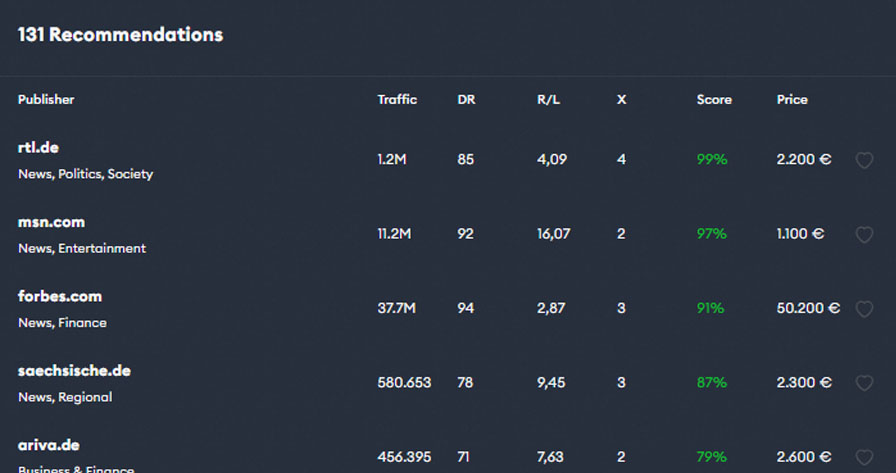
A quick buying heuristic:
- Premium placement: contextually relevant page, real readership, selective outbound links, strong fit with your topic.
- Commodity placement: broad “write for us” page, visible pricing, weak topical standards, lots of commercial anchors in old posts.
- Trap placement: site looks good at a glance but the archive reveals casino, loans, crypto, CBD, essay-writing, and unrelated B2B posts all mixed together.
Inflation is highest in the first category because serious buyers want it and serious sellers know it.
Common Backlink Pricing Models and Valuation Metrics
Domain Authority (DR/DA) vs. Genuine Organic Traffic
Most overpriced links share one trait: they are sold on authority metrics alone.
DR and DA are useful directional signals. They help you prioritize review. But they are not value by themselves. A DR 70 site with weak topical alignment, stale traffic, and pages built for link sales can be a much worse buy than a DR 35 site with strong relevance and real search demand.
When I vet a placement, I usually stack the review in this order:
- Topic fit
- Organic traffic quality
- Referring domain profile
- Outbound link behavior
- Indexation and freshness
- DR/DA as a supporting metric, not the deciding metric
Why this order works:
- Topic fit tells you whether the link makes sense.
- Traffic quality helps reveal whether the site is alive.
- Outbound behavior shows whether the site is monetizing trust too aggressively.
- Indexation and freshness show whether Google is still engaging with the domain.
A simple decision rule helps here. If a seller leads with DR, but gets vague when you ask which sections drive traffic or which pages actually rank, slow down. You are probably being sold a score, not a placement.
The Cost Disparity Between DoFollow and NoFollow Links
The market still charges more for dofollow links because buyers expect ranking impact.
That expectation is why dofollow inventory is priced aggressively and why cheap dofollow offers are often the most dangerous segment of the market. Google’s own guidance on qualifying outbound links is clear that paid links should be qualified with rel="sponsored" and that nofollow remains acceptable for cases where you do not want to pass association or crawling signals in the normal way.
So why do people still pay a premium for unqualified dofollow placements?
Because some of those links can still move rankings. But the buyer is taking on more risk, and that risk now needs to be priced in.
A smarter way to evaluate the difference:
- A nofollow or sponsored mention on a truly relevant, high-visibility page can still be worth buying for brand exposure, referral traffic, and secondary link pickup.
- A dofollow link on an irrelevant or over-optimized page can be a poor investment even if it looks stronger in a spreadsheet.
This is where intermediate SEOs usually improve their judgment. They stop treating link attributes as the whole story and start evaluating the entire placement environment.
Editorial Placements vs. Standard Paid Guest Posts
Editorial placements usually cost more because they are harder to manufacture.
A standard paid guest post often follows a known process: pitch, agree terms, submit article, insert link, publish. Editorial placements tend to involve stronger gatekeeping. You may need a unique insight, a proprietary stat, a useful quote, a strong resource, or a relationship with the editor. That is why they tend to survive longer and look better in backlink profiles.
Here is the practical difference:
If you have to choose between three low-grade guest posts and one strong editorial placement, the single better placement usually ages better.
Not always. But often enough that it should influence budget allocation.
The Open Secret of Paid Links: Navigating Risks and Rewards
Why Buying Cheap Backlinks is Now an SEO Liability
Cheap backlinks fail in two ways.
First, they often do nothing. Google’s systems are much better at ignoring spammy or paid-looking links than many buyers want to admit, which means the money disappears without visible upside. Ahrefs summarizes this risk directly and notes the long-cited average paid link cost of $83 from an Authority Hacker survey, while also warning that cheap package links are commonly found in low-end marketplaces.
Second, cheap links leave patterns.
The patterns are familiar: same-site templates, irrelevant anchors, recycled content, link farms hiding behind “guest post” labels, or obviously rented placements on pages built only for outbound monetization. Even when those links are not penalized, they clutter your profile with noise that becomes harder to trust and harder to audit later.

If a link is cheap because the seller has unlimited inventory, that unlimited inventory is usually the problem.
The old logic was “a cheap link is worth testing.” That logic breaks when Google can ignore the signal and you still absorb the cleanup cost, reporting confusion, and opportunity cost.
A better floor rule is this: if the link vendor cannot clearly explain why this site would mention your brand aside from payment, walk away.
Operating in the Gray Area: Good vs. Toxic Link Investments
Link building lives in a gray area because the web itself is messy.
Real sites collaborate. Partners reference each other. Founders contribute articles. companies run co-marketing campaigns. Relevant sites sometimes exchange links naturally because there is editorial reason to do so. Google’s policy does not ban the normal web. Google’s link schemes guidance specifically warns against excessive exchanges and links created primarily to manipulate rankings.
That distinction matters.
A good gray-area investment usually has these traits:
- tight topical relevance
- a legitimate reason for the mention
- reasonable outbound linking behavior
- content a human editor would publish anyway
- no forced exact-match anchor
- no scale pattern that screams footprint
A toxic one usually shows the opposite:
- weak or fake relevance
- pricing-first conversation
- obvious “SEO pages”
- mixed niches with no editorial logic
- anchors chosen for rankings, not readability
- repeatable at scale with minimal review
This is also where link exchanges need nuance. If two related sites collaborate on useful content and cite each other sparingly where it helps the reader, that is normal web behavior. If a network of unrelated sites trades links to boost metrics, that is exactly the kind of pattern Google lists as spam.
The safest rule is not “never exchange links.” It is never make exchange logic the primary reason a link exists.
Paid Backlinks vs. Organic Link Building: A Cost Comparison
The Hidden Expenses of Digital PR and Data-Driven Content
Organic link building sounds cleaner because no placement fee changes hands. But “organic” does not mean cheap.
Digital PR campaigns can require dataset purchases, analyst time, design, outreach, journalist list building, and repeated pitching. And one of the most familiar low-cost media response channels is gone in its old form: Connectively, the platform that followed HARO, was officially discontinued on December 9, 2024, and the HARO asset was later sold by Cision in April 2025, as Cision announced.
That matters because many teams used those systems as a lightweight link acquisition channel. Now they need other workflows, better media relationships, or stronger owned assets.
A realistic digital PR cost stack often includes:
- strategist time
- analyst or researcher time
- copy and data visualization
- outreach operations
- reactive follow-up
- content refreshes if the campaign underperforms
That can still be worth it. One strong campaign can earn links that would be impossible to buy cleanly. But if you compare only “paid link fee” versus “organic link,” you are not comparing real costs.
Investing in Linkable Assets to Earn Links Naturally
The most durable answer to backlink inflation is to create assets people actually want to cite.
That can be original research, a calculator, a benchmark page, a statistics hub, a free template, a visual explainer, or a genuinely useful industry resource. These assets are slower to produce, but they improve your economics because one good asset can attract links repeatedly.
Here is a simple workflow that works better than publishing random “link bait”:
- Identify a question people in your niche repeatedly reference.
- Build the best source on that narrow question.
- Add something proprietary or hard to summarize from competitors.
- Make the page easy to quote, cite, and link to.
- Promote it to people already writing about that topic.
For example, if you work in B2B SaaS, a page comparing implementation timelines, pricing structures, or migration pain points across tools is often more linkable than another thought-leadership article. It solves a real citation problem.
This is slower at the start, but over 12 months it often reduces your dependency on paying inflated rates for every marginal link.
Resource Drain in Modern Broken Link Building
Broken link building still works, but the workload is heavier than most playbooks admit.
Years ago, many campaigns succeeded by finding dead resources, emailing the webmaster, and offering a replacement. Today, more sites ignore those emails, more prospects have already been contacted, and more broken pages are low-value opportunities to begin with.
The resource drain usually comes from three areas:
- finding broken pages that had genuine link equity
- building a replacement resource that is actually good enough
- convincing site owners to update a link they may not care about
This tactic becomes expensive when teams chase volume. It gets more efficient when you apply stricter filters:
- only pursue broken pages with relevant backlinks
- prioritize prospects where your replacement is clearly stronger
- skip sites with neglected editorial maintenance
- write outreach that focuses on the fix, not the ask
If your replacement asset is mediocre, broken link building turns into a time sink fast.
How to Make Smart Purchasing Decisions in an Inflated Market
Red Flags to Avoid When Evaluating Link Vendors
A smart buyer protects budget before chasing upside.
The fastest way to do that is to reject bad inventory early. Here is a concise checklist I would use before approving any vendor or placement source.
Quick vendor check
- Does the site have obvious topical fit?
- Can you see real organic traffic patterns, not just a DR score?
- Are outbound links selective and contextually placed?
- Is the archive free of spam-heavy niches and random commercial posts?
- Would the page still make editorial sense without your link?
If two or more of those fail, I usually pass.
This table helps separate normal opportunities from likely problems:
One more warning: visible site lists can be useful, but they often attract overuse. The more a domain is circulated among vendors, the more likely it is to accumulate obvious SEO footprints.
Smarter Budgeting Alternatives to Direct Link Buying
If direct link buying feels overpriced, do not default to doing nothing.
Usually, the better move is to reallocate budget across three buckets:
-
High-confidence placements
Spend on a small number of opportunities with strong relevance and brand fit. -
Asset creation
Build one or two pages that can earn links repeatedly. -
Partnership workflows
Develop selective collaboration channels with adjacent sites, newsletters, communities, and content partners.
That third bucket is where many teams can improve quickly. Instead of paying one-off fees for every mention, they build repeatable relationships with relevant sites. Sometimes that includes interviews, co-created resources, product roundups, expert commentary, or occasional reciprocal mentions where the context is legitimate and not excessive.
If partner discovery is the bottleneck, using a system that pre-filters by relevance and risk signals can be more efficient than cold-start prospecting from scratch every month. The goal is not to automate link manipulation. The goal is to spend human review time only where there is a plausible editorial fit.
A practical budgeting split for a lean SEO program might look like this:
- 40% on premium linkable content or assets
- 30% on outreach and partnerships
- 20% on a limited number of high-confidence placements
- 10% on testing and cleanup
That mix is not universal, but it is much healthier than spending 100% on bought links and hoping none of them age badly.
Conclusion: Adapting Your Strategy to the New Economy of SEO
Backlink prices are rising because the market finally prices quality, risk, and scarcity more honestly.
Google has made low-grade manipulation less rewarding. Publishers understand their leverage. Outreach takes more effort. And the links that still move the needle are usually the ones with the strongest editorial logic.
That does not mean you should stop investing in links. It means you need better filters.
Buy fewer links. Vet harder. Build assets worth citing. Treat relevance as a non-negotiable. Use partnerships carefully and with editorial restraint. And if a placement only makes sense inside an SEO spreadsheet, it is probably too weak for today’s market.
The teams that adapt best are not the ones with the biggest backlink budgets.
They are the ones that stop paying inflated prices for weak inventory and start building a link profile that still looks believable a year later.